Process shown with kind permission from Eldon Ager.
When designing a poster, my guiding light is to limit myself to 250 words and fewer than 3 graphs. You have only half a second– the time someone is walking by– to win their attention.
Design
The process
You aren’t going to get it on the first try. Or the second. Or the third.
I work by first setting the dimensions of the poster in PowerPoint and then building on top of that. Don’t delete anything, just create a new page! Sometimes an idea from a forgotten draft is just what you needed for the final.
Experiment with different shapes. How can you use the least amount of words while still communicating your message?

Try sketching your ideas out on paper. Get your thoughts and story written, then refine them. Here, one of my best friends Ilmur Jónsdóttir, illustrates her process to designing her poster for the CRISPR2023 conference. Notice her use of space, emphasis and colour throughout her design.


Trust me, I know it’s difficult. But imagine in a conference of 100s of posters after many hours of talks (poster sessions are usually scheduled at the end of the day, or at the end of a conference), people are tired and sometimes it’s hard to engage in a meaningful way after riding a conference high all day. So, cut cut cut. Say it in pictures, say it in shapes. If someone really wants to know more, they will scan a QR code, e-mail you, or talk to you if you are there in person!
Make it as easy as possible for people passing by to understand and get excited by your work.
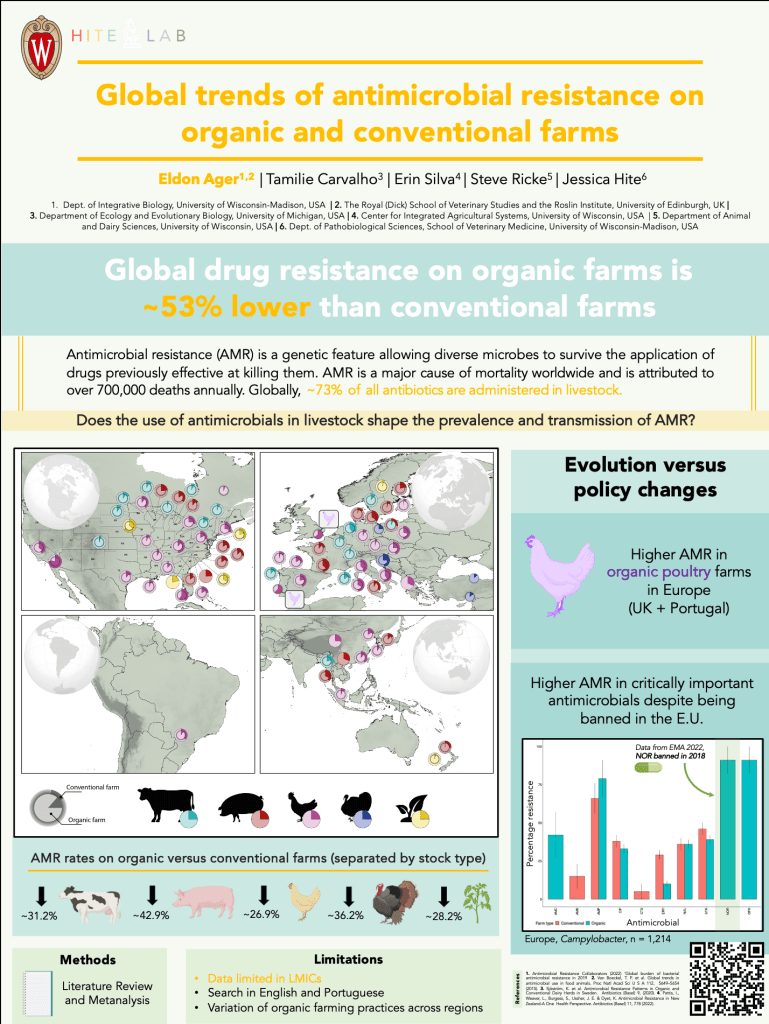
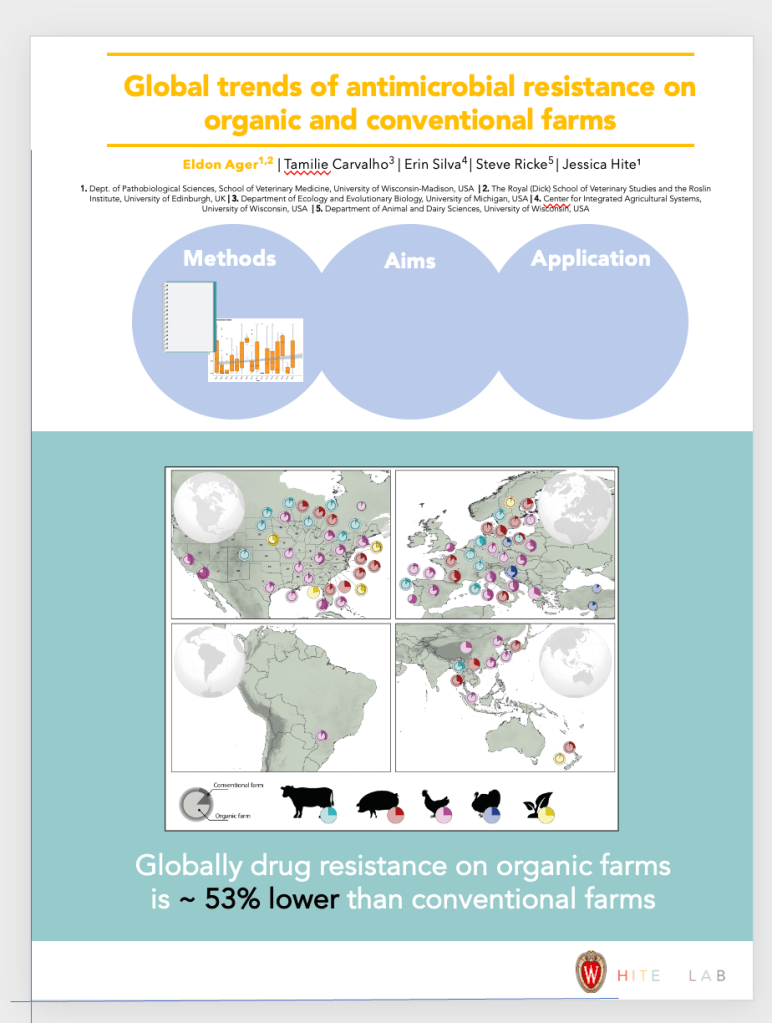
The before and after of the design process.


SHAPE
If you look up scientific posters, a lot of them are a ton of text and incredibly boring. Look at interior design books! Or google “winning [insert conference] poster”.
You DO NOT have to conform to square-text-square-text pattern.
COLOUR
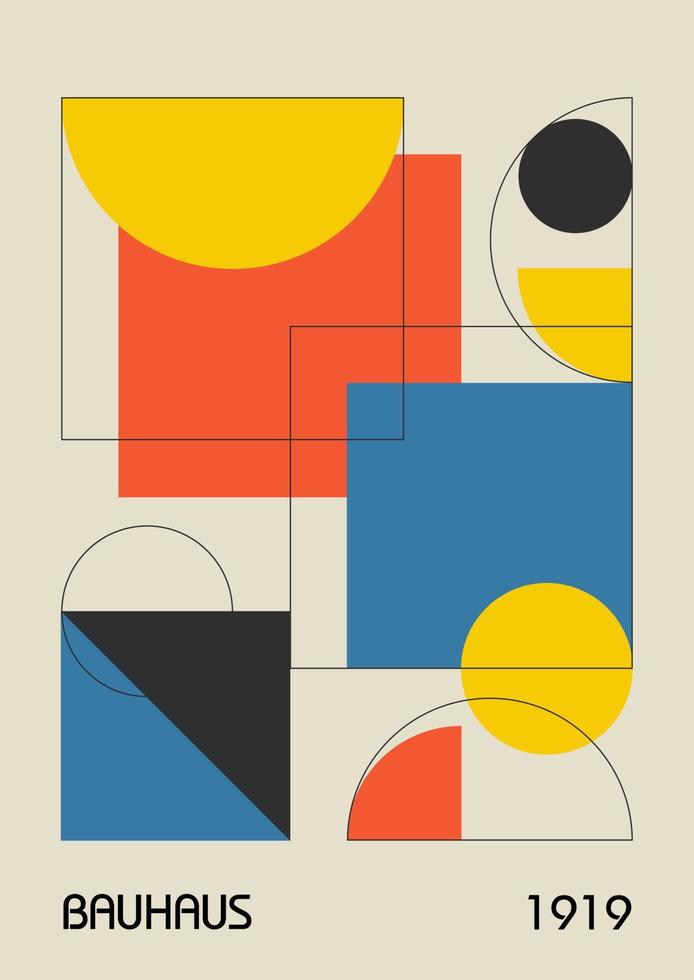
+ Limit the use of colours. Be careful with your palette and be consistent throughout words, plots, and emphasis.


KEY WORDS
+ What words do you want people to focus on? Spend time really about your story, and how you would summarize your work in 1 sentence. (yes, it can be done!)

 Chloe Fouilloux