Original watercolour paintings by Chloé Fouilloux

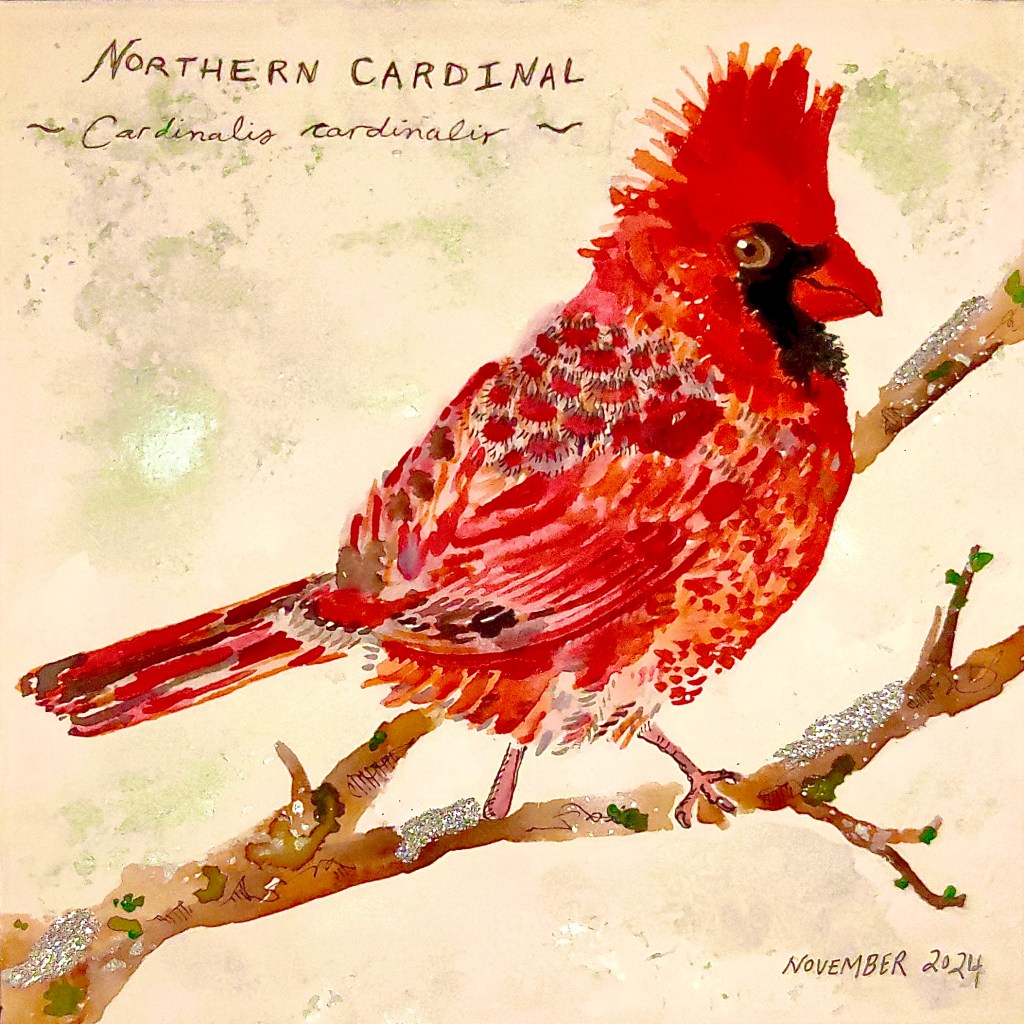


Color is fundamental to the success of animals in the wild.
But what is the purpose of color? This question long puzzled Darwin, who was both excited and frustrated by dazzling animal ornamentation. Color can work in contrasting ways across the animal kingdom: to protect an animal (camouflage), to serve as a warning signal (i.e., bright colors can signal, “Watch out, I’m poisonous!” to a predator), and to attract a mate (honest signal of reliable mate quality).
In these paintings, I consider the amazing diversity of color across bird species that exist in wildly different habitats. While the beaks of finches have famously captured biologist’s curiosity of evolution and adaptation, we can ask the same question of color.
Does the bright red of a male cardinal in a temperate forest arise from similar selective pressures as the red of a great macaw in the Amazon? While these birds have had to navigate distinct selective pressures due to their habitat and ecology, the “form” (e.g., melanin vs. carotenoid) and function of color is a striking adaptation that we can see vividly played out across the tree of life.
Think about the animals you see around Madison. What colors do they use? Do males and females have the same color? Do they change colors in different seasons? All the colors of the rainbow can be found in our beautiful Madison animals, sometimes in the most unexpected places.

Presenting “Adaptive Hues” at Darwin Days Winter 2025.
[Voted Audience Favourite and 2nd from judging panel]
 Chloe Fouilloux